Turkey Eat Beef: A Candid Design Review for Commercial Embroidery
When considering a new embroidery file for seasonal projects, especially one meant for commercial sale or custom gifts, my first step is always a thorough evaluation. It's not just about whether a design is cute; it's about whether it will stitch reliably, look professional on the finished product, and ultimately satisfy a paying customer. Today, I'm looking at Turkey Eat Beef from Creative Fabrica, a Thanksgiving-themed embroidery design, from that exact practical perspective.
First Impression & Visual Mood
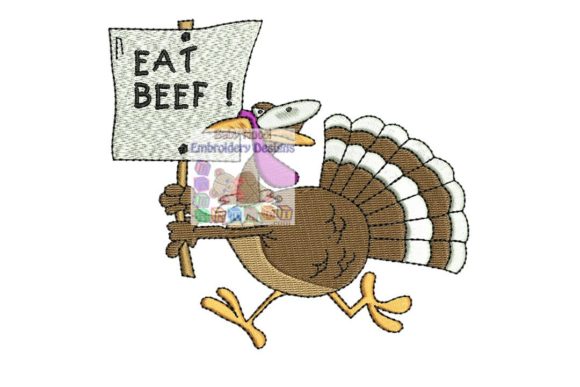
The initial charm of Turkey Eat Beef is undeniable. It has a playful, lighthearted personality that fits perfectly with the casual, celebratory mood of Thanksgiving decor and apparel. This isn't a formal, realistic turkey; it's a decorative, character-driven design. That automatically tells me it will work best on items where fun and cheer are the priority: kitchen towels, aprons, casual sweatshirts, tote bags, and pillow covers in a home setting. The design's style suggests it would be a hit for handmade gifts, Etsy listings targeting families, or products for craft fairs where visual appeal drives quick sales.
Evaluating Real-World Project Performance
Moving beyond the initial appeal, I mentally test Turkey Eat Beef across various real embroidery scenarios I commonly handle.
Custom Apparel & Home Decor
For items like T-shirts, sweatshirts, and tote bags, this design's likely composition—which appears to have a central character with text—needs careful consideration. The phrase "Turkey Eat Beef" is integral. I immediately think about small lettering. If the text elements are very small or densely stitched, they might pose challenges on textured or stretchy fabrics like jersey for sweatshirts. A proper, sturdy stabilizer would be mandatory. For a tote bag made of canvas, however, it would likely stitch out cleanly. On pillow covers or napkins, which are typically flat and stable, Turkey Eat Beef should perform very well, enhancing the handmade, seasonal presentation of the final product.
Specialty Items & Frequent Wash Considerations
Two specific applications come to mind: caps and baby items. Embroidering on the curved surface of a cap requires a design that can adapt without losing detail. The potential small details in this turkey design would need to be inspected after a test stitch. For baby blankets or nursery decor, where frequent washing is a concern, stitch density is critical. A design with overly dense fill stitch areas might become stiff or uncomfortable. Without knowing the exact stitch count, I would strongly advise testing Turkey Eat Beef on a scrap of the intended fabric first to assess its feel and durability after washing.
Commercial Use & Product Value
For small business owners and Etsy sellers, a design like this can directly affect product value and buyer trust. A clean, well-executed embroidery of a charming design elevates a simple kitchen towel or apron into a desirable, gift-ready product. It supports brand consistency for shops specializing in seasonal handmade goods. Furthermore, Turkey Eat Beef would create strong product photography—the clear, cheerful motif engages customers visually. For commercial embroidery projects, such as batch-producing patches or a line of Thanksgiving sweatshirts, its success hinges entirely on the technical details of the embroidery file itself.
Practical Embroidery Notes & Pre-Use Checklist
Before ever loading this Creative Fabrica embroidery file into my machine for a customer order, here is the practical checklist I follow, which any professional should consider.
- File Details & Licensing: The product description mentions various applications, but it does not list specific technical data. I must check the actual Creative Fabrica product page for crucial information: the included file formats (DST, PES, etc.), the recommended hoop size, any stated stitch count, and the exact licensing terms for commercial use. Never assume; always confirm.
- Test Stitch on Scrap Fabric: Run the design on a scrap of the fabric you plan to use—whether it's a twill for an apron, a fleece for a sweatshirt, or terry cloth for a kitchen towel. This reveals everything: the true stitch density, how small details like the turkey's features or text emerge, and whether any thread colors need adjustment for better contrast.
- Contrast & Fabric Color: Consider how Turkey Eat Beef will look on both light and dark fabrics. You may need to adjust thread colors or use a different backing stabilizer for dark fabrics to ensure the design pops. Creating simple mockups (even digital ones) helps visualize the final product.
- Stabilizer Selection: The success of any embroidery design, especially on stretchy or delicate fabrics, depends on using the correct stabilizer. For the mentioned "jumpers" or "Sweat," a cut-away or tough tear-away stabilizer is likely necessary to prevent puckering.
- Detail Inspection: After the test stitch, physically inspect the smallest elements. Are the satin stitches (if present) smooth? Are any running stitch outlines clean? This is vital for maintaining a professional finish on your handmade product.
Final Assessment: Is Turkey Eat Beef Worth Using?
From a designer's point of view, Turkey Eat Beef has strong decorative appeal for a specific niche: festive, casual Thanksgiving projects. Its visual mood aligns perfectly with the described applications—home decor, apparel, and gifts. However, its worth for your real project is not guaranteed by its charm alone.
The decision to download and use it hinges entirely on the undisclosed technical specs and your due diligence. If the embroidery file is well-constructed with reasonable stitch density, appropriate hoop size for your target items, and clean small details, then it could be a valuable asset for seasonal product lines. It could enhance giftability, customer engagement, and your shop's seasonal offerings.
If, however, the file has extremely high stitch density or tiny lettering that struggles on common fabrics, it might lead to frustrating production issues and subpar finished products. Therefore, my final, honest advice is this: Turkey Eat Beef is certainly promising, but treat it like any professional digital embroidery file. Review the product details meticulously on Creative Fabrica, perform your standard pre-production tests, and only then commit it to a real customer order for that apron, tote bag, or baby blanket. That process is what separates a successful commercial embroidery project from a disappointing one.