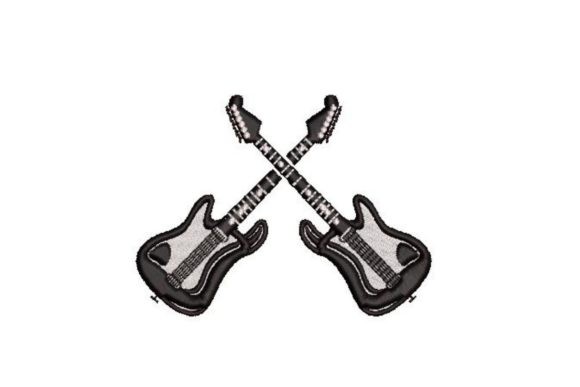
Electric Guitars Embroidery: A Designer Review for Branded Merch
From a professional embroidery designer’s perspective, reviewing a design like Electric Guitars for small business merchandise is a practical exercise in branding and production. This isn’t just about decoration; it’s about evaluating an asset for its commercial potential across patches, uniforms, and product labels. Let’s dive into how this machine embroidery design might perform in the real world of cafes, boutiques, studios, and handmade brands.
First Impression: Playful, Passionate, and Professionally Friendly
The title and description suggest a design that is inherently playful and passionate. "Cute" points towards a friendly, approachable aesthetic, perfect for businesses wanting to convey a creative and personal touch. For a music-themed cafe, a boutique selling handmade instruments, or a creative studio, this visual personality aligns well with a brand that values artistry and customer connection. It feels less rustic or premium and more modern and decorative, making it ideal for merchandise aimed at engaging a community or expressing a specific passion.
Electric Guitars in Real Business Use: From Patches to Product Labels
This digital embroidery file holds significant potential for various small business merch applications. Its core strength lies in its versatility as a recognizable icon.
Primary Applications for Maximum Impact
Embroidered patches are a standout use. A patch featuring Electric Guitars can be applied to tote bags, aprons, or even as a product label sewn onto guitar covers or music-themed accessory bags. It instantly creates a branded product add-on that elevates a handmade product. For staff uniforms, such as work shirts or apron embroidery in a music venue’s cafe, it serves as a subtle, thematic chest logo accent or sleeve detail, building brand identity and visual consistency.
Cap embroidery is another strong candidate, provided the design’s dimensions are suitable for the curved front of a cap. It would make excellent event merch or a gift for loyal customers. As a mark on a tote bag design, it adds value and turns a simple bag into custom apparel. For an Etsy seller specializing in music-related crafts, this design becomes a key design asset for creating a cohesive line of boutique merchandise.
Enhancing Brand Identity and Customer Engagement
Using Electric Guitars across your merchandise directly affects customer trust and recognition. A consistent, well-executed embroidered logo on your products signals professionalism and attention to detail. It increases the perceived product value and strengthens your handmade presentation. When customers see the same design on your online printable mockup, your staff’s apron, and the patch on a sold item, it creates a unified brand experience that fosters deeper buyer engagement.
Caution and Consideration: Where to Use Electric Guitars Carefully
Every design has its limits, and a professional review must highlight them to ensure a successful finished product. Based on common production challenges, here are areas to approach with care.
- Small Patch Sizes: If you intend to create very small patches for product tags or keychains, test the embroidery file at that reduced size first. Details might become too dense or lose definition.
- Cap Fronts and Curved Surfaces: The curvature of a cap can distort flat designs. A test run on an actual cap is crucial to check placement and stitch integrity.
- High Stitch Density & Detailed Outlines: The description doesn’t specify stitch count, but "cute" and detailed designs can sometimes lead to high stitch density. On lightweight or stretchy fabric texture, this requires careful hoop size selection and the correct stabilizer to prevent puckering.
- Dark Uniforms and Thread Color Contrast: If applying to dark staff shirts, you must review the suggested thread colors. Light or bright threads will pop, but if the design relies on subtle shading, contrast may be lost. Always test it in black and white first on a fabric swatch to gauge its readability.
- Items for Frequent Washing: Merchandise like aprons or work shirts undergoes heavy wear. A robust stitch structure is key. Inspect the design's spacing and outlines; tight, secure stitches will withstand washing better than loose, delicate ones.
Practical Designer Notes for Commercial Success
Before committing this design to a commercial embroidery project, follow these steps as a seasoned designer would.
- Test on Real Fabric: Hoop it up and stitch it out on the actual material you plan to use—be it denim for a tote bag, twill for a cap, or polyester for a uniform. This reveals any issues with fabric texture or pull.
- Create a Mockup for Client Approval: Even if you’re the business owner, creating a digital printable mockup of the design on a shirt or bag helps visualize the final product and aligns expectations.
- Compare Beside Other Design Assets: Place the stitched sample next to your other branding elements (logos, fonts). Does Electric Guitars complement them and maintain your brand’s visual voice?
- Confirm Critical Technical Details: The product description mentions it comes with multiple embroidery file formats, but does not list specific hoop size requirements or exact licensing. Always check these details with the file seller before production. Ensuring you have the correct format for your machine and clear commercial licensing for business use is fundamental.
- Review Thread Color Contrast and Spacing: Look at the color palette suggested by the file. Plan your thread choices to maximize visibility on your chosen garment colors. Also, inspect the digitizing for adequate stitch spacing to prevent thread breaks or overly thick areas.
The Final Stitch: A Versatile Asset for Music-Themed Brands
In summary, the Electric Guitars embroidery design presents itself as a versatile, friendly asset for businesses whose brand identity is tied to music and creativity. Its potential as an embroidered patch, uniform accent, or product label is high, offering a path to enhanced professionalism and customer recognition. However, its successful integration into your small business merch lineup depends entirely on diligent testing and adaptation to the specific demands of each application—from cap embroidery to durable aprons. Approach it not just as a cute design, but as a strategic design asset for building your brand’s tangible presence.